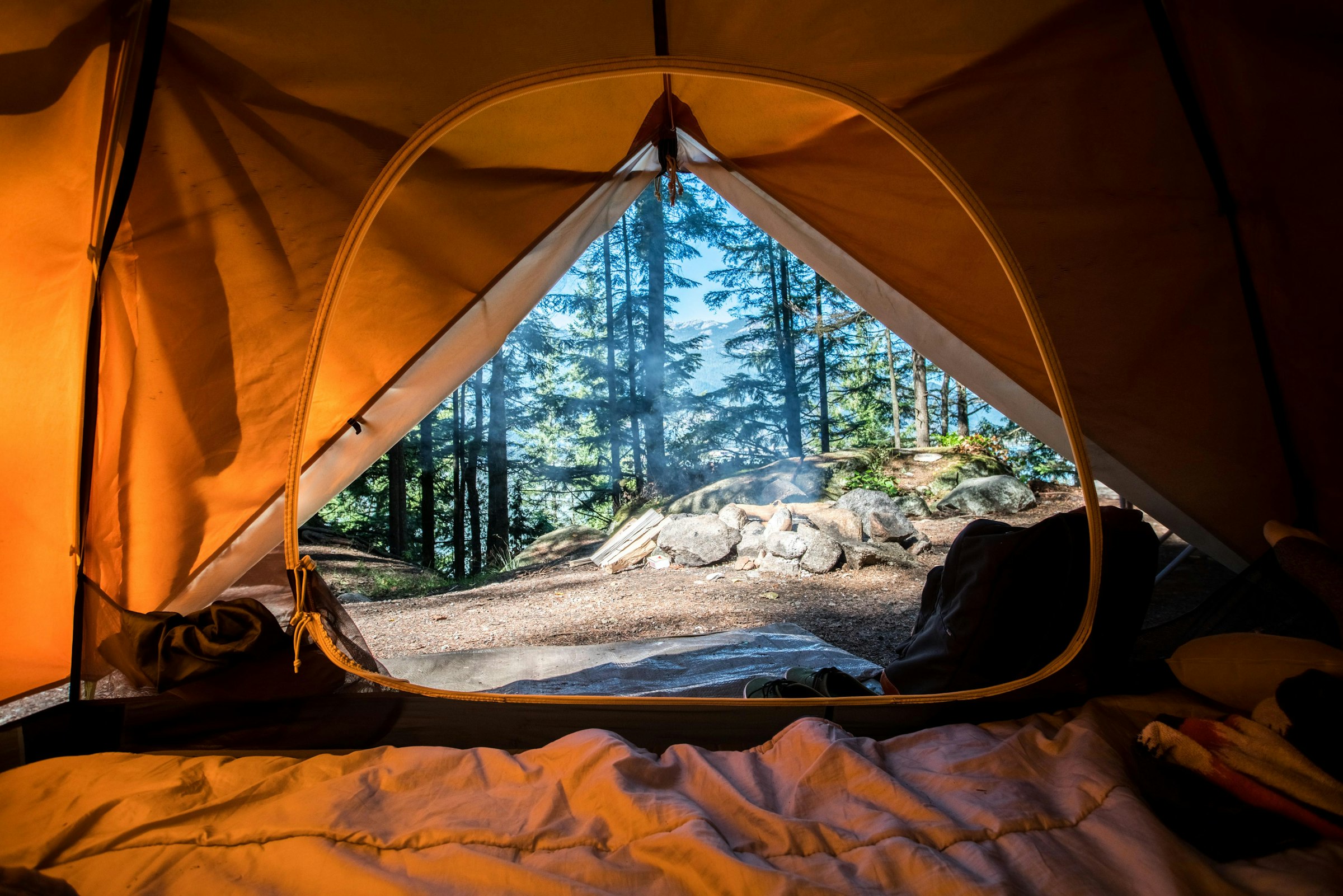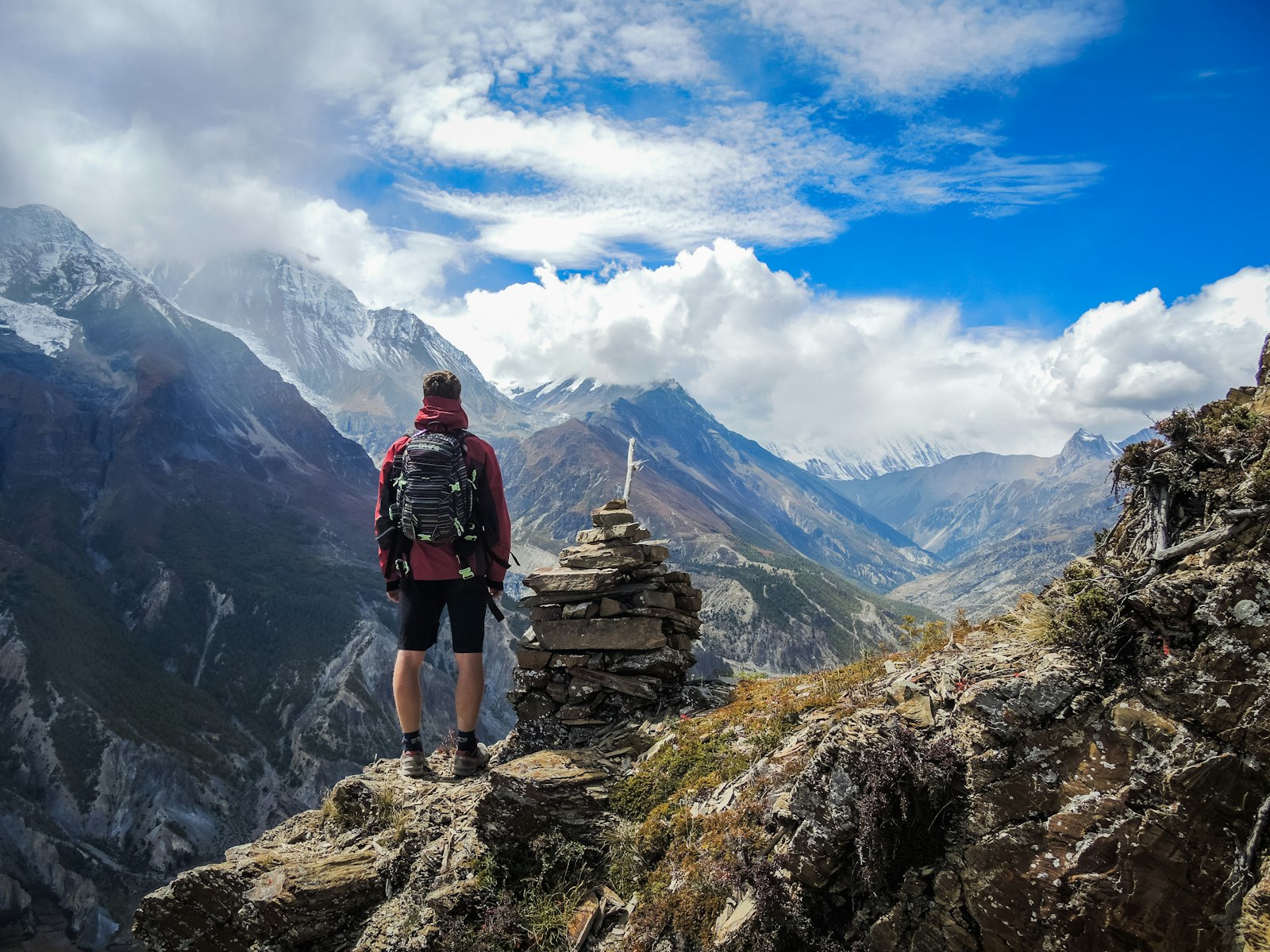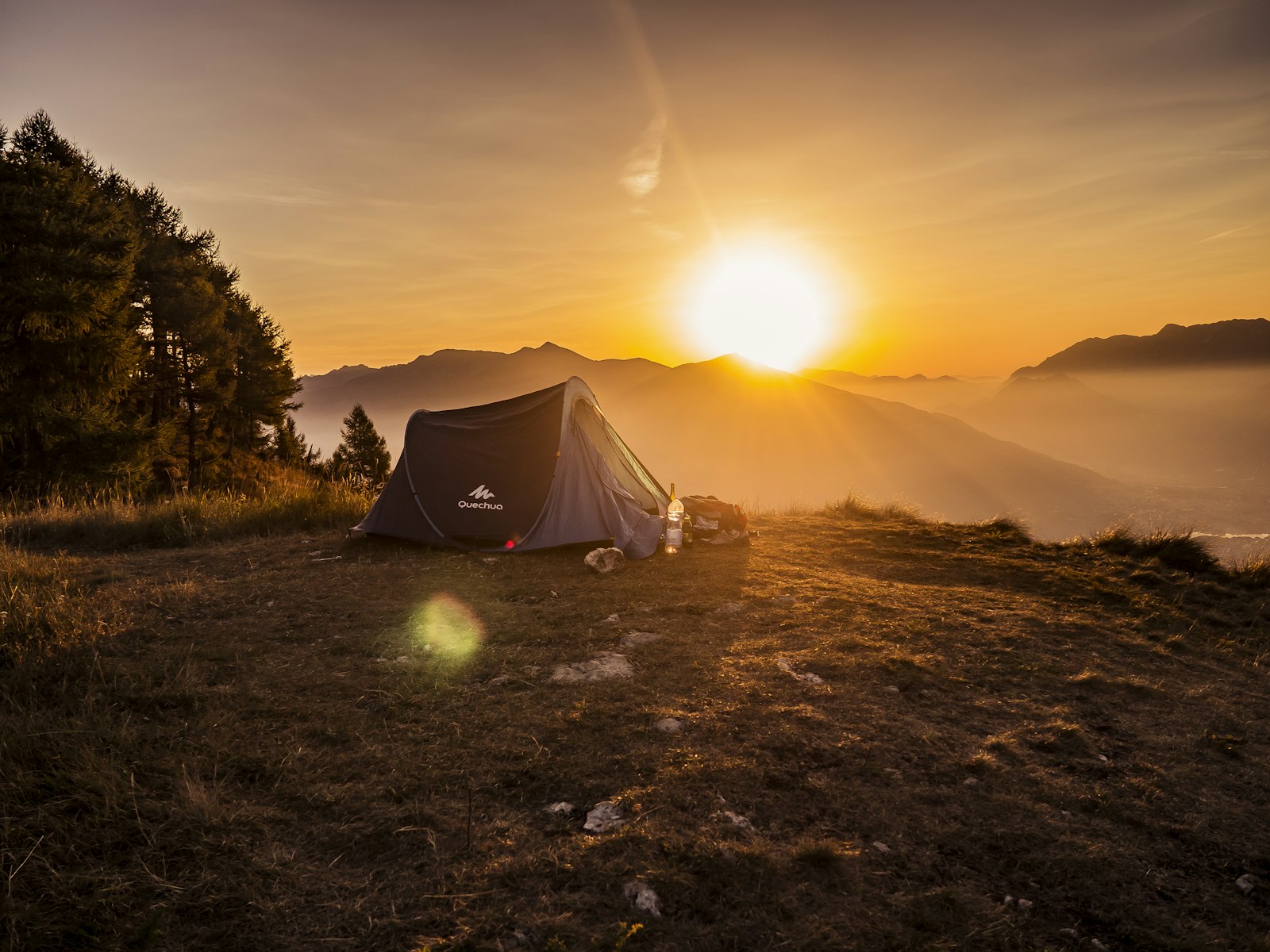
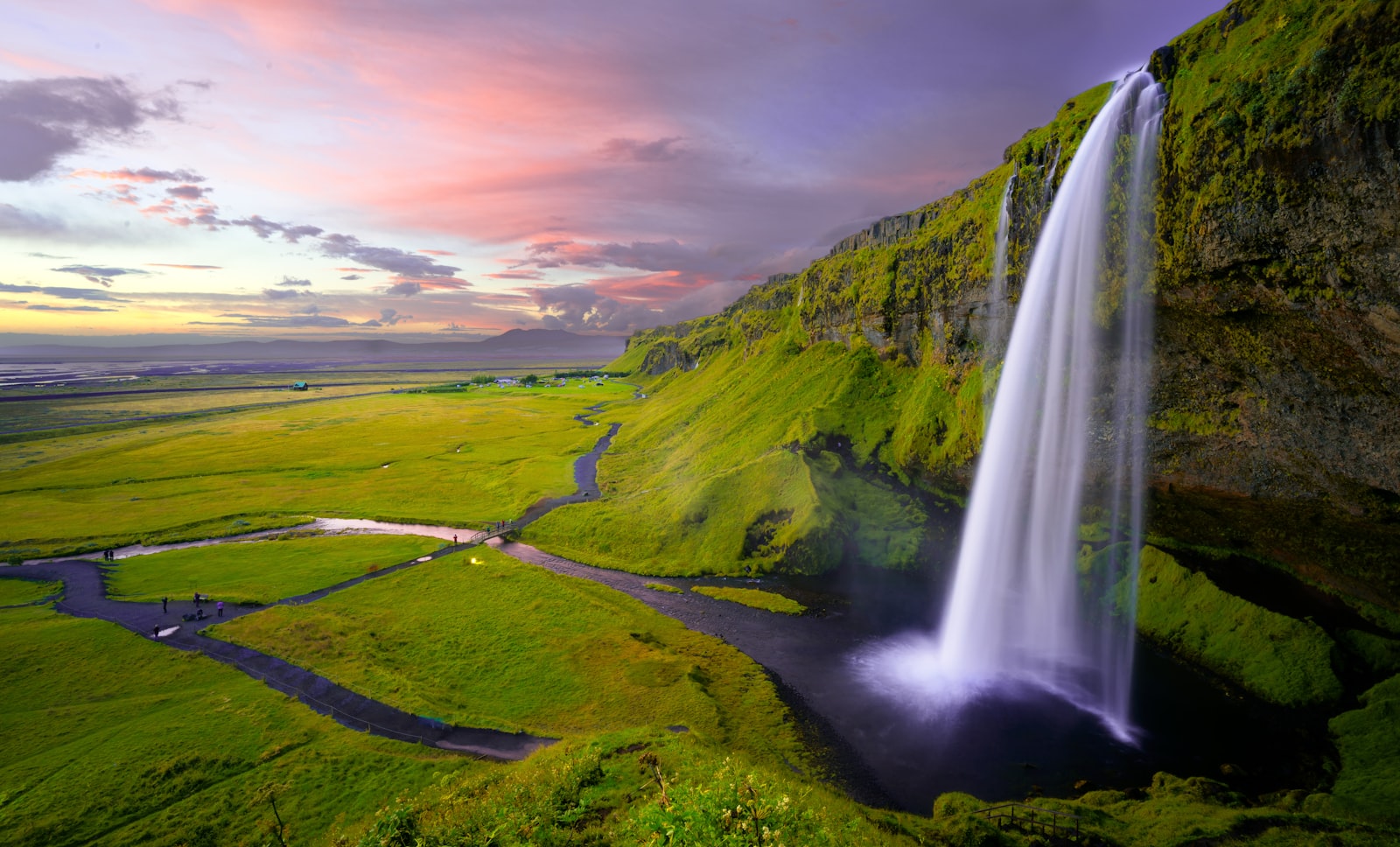

Your tent’s spec sheet was written in a lab. Your night will be decided by thirty square feet of dirt you’ll choose in the last, laziest hour of the day — usually exactly when you should be choosiest. Five deliberate minutes fix that, every time.
We say this with data behind it: when we sorted the misery reports in our tent review database — flooded floors, soaked-through condensation, snapped poles, sleepless wind-flap nights — the majority traced to the site, not the shelter. The same tent earns one star in a cold-air sink and five stars on a forest bench eighty feet away. Here’s the five-minute ritual that puts you on the bench.
Minute one: look up before you look down
The first scan is overhead, and it’s non-negotiable: dead limbs and standing dead trees — “widow-makers” — are the backcountry hazard that actually kills campers, ahead of everything your imagination prefers to worry about. Look for hung branches, bark-shedding trunks, and that one leaning snag pointing at the obvious tent spot like an accusation. The test is simple: if you wouldn’t park a car you loved under it, don’t sleep under it. Wind you’ll notice; a falling limb you won’t.
While your head is up, read the canopy itself: a partial tree canopy is the best condensation equipment you can’t buy — it radiates warmth back down and keeps your fly degrees warmer than open sky, which is the difference between a damp tent and a dripping one.
Minute two: read the water that isn’t there yet
That smooth, flat, invitingly clear patch is often flat because water flattened it — you’re admiring a drainage in its day clothes. Look uphill: do shallow channels, sand ribbons or matted vegetation point at your spot? Is there a fresh debris line of pine needles and twigs curving around it? That line is the high-water mark of a storm someone else slept through badly.
Camp on ground that sheds water rather than collects it: gentle convexity beats any concavity, and a barely perceptible slope — feet pointed downhill — beats perfectly flat in any rain. The old advice to trench around a tent died decades ago for good Leave-No-Trace reasons; site selection is the trench now. And give creeks and rivers respect plus distance — flash-prone country can move a night’s worth of water through a pretty gravel bar with very little notice.
Minute three: cold air is a river — camp on its banks
After sunset, cold air flows downhill exactly like water and pools where water would: valley floors, meadow basins, lake bowls. Those dreamy lakeside meadows are routinely 10°F colder than a forested bench fifty vertical feet higher — a difference larger than the one between your sleeping bag and the next model up, available for free by walking two minutes uphill.
The ideal elevation is the middle of the slope: above the cold-air pool, below the wind-raked ridgeline. Hikers who frequent one valley learn its thermal belt — the band where frost comes last and mornings start warmest — and you can read it on the land: where meadow grass yields to forest is usually where the cold pool’s surface laps. Camp above the tide line. Your pad’s R-value fights conduction all night either way; don’t make it fight the whole valley’s cold reservoir too.
Minute four: break the condensation triangle
Condensation needs three things at once: moisture-laden air, a fly surface chilled below the dew point, and stillness. Lakeshores, creek banks and lush meadows supply the moisture. Open sky chills the fly — on clear nights a rainfly radiates heat to space and drops below the air temperature, which is why the heaviest “rain inside the tent” nights are often the clearest ones. And windless hollows supply the stillness that lets saturated air sit against fabric for eight hours.
Break any leg of the triangle and the problem collapses: camp 200 feet from water on ground that drains, take partial canopy over open sky, and accept a whisper of breeze instead of dead calm. Do all three and you’ll wake to a dry fly while the lakeside crowd wrings theirs out — same tents, different physics. No shelter design, including the double-wall champions in our tent guide, out-engineers a saturated, windless, radiatively-cooled site.
Minute five: wind, neighbors, and the morning audit
Last sweep. Wind: you want moving air, not weather — a site with a gentle through-breeze beats both the gale-raked ridge and the dead-calm hollow, and natural windbreaks (boulders, krummholz, deadfall on the windward side) buy quiet without buying condensation. Point the tent’s lowest, strongest profile into the prevailing wind and actually use the guy-out points; most “my tent failed in the wind” reports are pitch failures wearing a tent costume.
Then the courtesies that double as craft: 200 feet from water and trail (it’s the rule, and it’s also where the better microclimates live), durable surfaces — bare dirt, duff, rock, established sites — over vegetation that will hold your outline for a season, and a ten-second think about morning sun. An east-facing site dries your fly while you make coffee; a deep-shade site hands you a wet tent to carry. Small thing at 7 p.m., large thing at 7 a.m.
“After thirty years I can pitch any tent in four minutes. I still spend ten picking where. The ratio is the lesson.”
The kind of sentence experienced hikers repeat almost word for word
The 60-second version, for tired evenings
- Up: no dead limbs, no leaning snags, partial canopy if available
- Uphill: no channels, ribbons or debris lines pointing at the spot
- Elevation: bench above the valley floor, below the exposed ridge
- Water: 200 feet away, with your door out of the moisture bath
- Air: a whisper of breeze, windbreak on the weather side, low profile into the wind
- Morning: east light if you can get it; your future self says thanks
The Takeaway
Five minutes of walking the site beats five hundred dollars of tent. Up for hazards, around for water paths, down for what you’ll sleep on — then pitch, guy out, and sleep like the forecast is someone else’s problem. The best shelter in our rankings is still only the second-most important decision you make each evening.
Campsite FAQ
Is it better to camp high or low when storms threaten?
Neither extreme: the mid-slope bench wins again. Valley bottoms collect water and cold; ridgelines and summits collect wind and lightning. In active thunderstorm country, get off exposed high ground early, avoid lone trees and shallow caves, and favor uniform forest at middle elevations — boring terrain is the safest terrain in weather.
How do I find these “good” sites in the dark?
You mostly don’t — which is the argument for choosing camp an hour before you need it. If dark catches you anyway: established sites beat improvisation at night, your headlamp can still run the look-up check (do it; the overhead hazard doesn’t care what time it is), and skip the marginal water-adjacent spots entirely, because every site looks flatter and drier by headlamp than it will at 3 a.m.
Do these rules change above treeline?
The priorities reorder: wind becomes enemy number one, and the windbreak (boulders, terrain folds) becomes the site. There’s no canopy to slow condensation or catch limbs, water paths are written plainly in the gravel, and cold-air drainage matters double in alpine bowls. Pitch low-profile, guy everything, and treat the forecast as a commitment rather than a suggestion — this is the terrain our bombproof tent pick was scored for.